
The Post-Occupancy Evaluation Wasn't Built for Plants
Controlled Environment Horticulture facilities operate as complex biological manufacturing systems where plants, not people, are at the core of the facility. Yet despite this fundamental distinction, most facility evaluation methods still assess these environments as though they were designed primarily for human occupants. After construction, the commercial building industry relies on commissioning, retro-commissioning, and Post-Occupancy Evaluations. These processes measure facility performance, ensure mechanical reliability, and in some cases are mandated by the AHJ to assure building-wide energy efficiency. These traditional frameworks were developed for offices, schools, and hospitals where the building occupants are humans.
CEH and commercial cannabis facilities present a fundamentally different operational reality because plant health is the primary objective. Traditional evaluations measure human comfort, workflow efficiency, and human-centric mechanical parameters, leaving critical gaps in biological performance. Relying on conventional building science to assess an intensive agricultural environment results in compromised yields, increased disease and pest pressure, and poor horticulture product quality. Understanding the limitations of standard facility assessments establishes the foundation for aligning engineering infrastructure and cultivation process design with horticultural reality. Precision drives profitability.
The Structural Flaws of Traditional Evaluations
The commercial real estate industry utilizes standard Post-Occupancy Evaluation to assess the technical, functional, and behavioral elements of a completed facility. In conventional commercial real estate, behavioral elements evaluate human psychological and physical responses. Evaluators measure ambient room temperature, general lighting levels, and basic air exchanges to ensure the comfort and productivity of the workers and occupants. Commissioning and retro-commissioning in commercial industrial settings focus on standard human comfort systems.
Controlled Environment Horticulture demands a completely different set of key performance indicators (KPIs). The financial success of a commercial cannabis facility rests entirely on yield consistency, crop uniformity, and disease and pest suppression. Measuring a cultivation space using human-centric criteria produces a false sense of operational performance. A typical indoor cannabis environment simulates a hot, sunny July day in Florida, regardless of the state where it’s built. The baseline for evaluations must change.
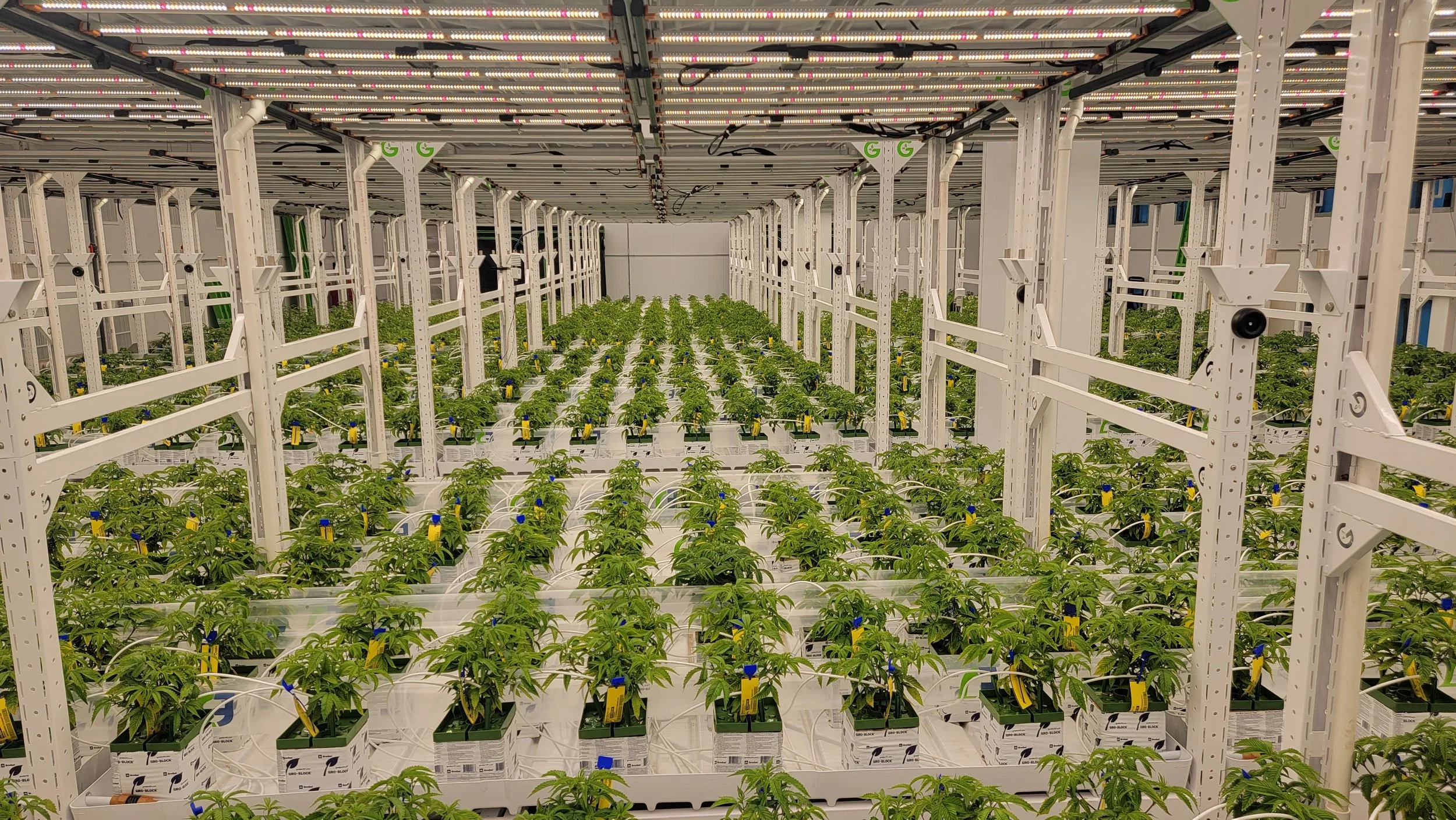
Designed by APD, Southern Crop's cultivation facility in Meridian, Mississippi, illustrates why cultivation facilities must be evaluated as biological production environments where environmental precision directly influences crop health, consistency, and profitability.
The Plant as the Primary Occupant
Plants are like the canary in the coal mine. They are highly sensitive environmental sensors. Adjustments to microclimates, room environments measured in Vapor Pressure Deficit (VPD), and thermal shifts from mechanical on/off cycle will create observable physical reactions from the plants. HVAC control sequences that work for people may appear operationally sound on a building automation system interface (BAS), but will produce environmental instability severe enough to reduce terpene expression, develop mold and Botrytis, and suppress overall yield.
Traditional evaluations track average conditions across large volumes of space with often a minimal number of sensors. This methodology ignores the localized realities of the active canopy. Minor fluctuations in VPD, localized airflow velocity, and leaf surface temperatures dictate the physiological success of the crop. Evaluators relying on conventional engineering assumptions miss these granular details completely. Horticultural performance must be prioritized over mechanical compliance.
Organizational Silos and Operational Friction
Commercial cultivations frequently suffer from organizational fragmentation. Cultivators prioritize plant behavior, nutrient recipes, and harvest targets, amongst many other KPIs. Facilities engineering teams prioritize equipment uptime, alarm management, and utility consumption. The financial team has tough decisions to make regarding balancing low first-cost of capital over proper system performance. When departments isolate their focus, they leave critical performance gaps unaddressed.
Conventional evaluations reinforce these silos by prioritizing equipment performance and mechanical lifespan over agricultural outcomes. Engineers evaluate HVAC controls, sensor calibration, operation sequences, and energy efficiency measures. While this process eliminates mechanical waste, it remains fundamentally equipment-centric. Lighting layouts routinely meet average target metrics while creating edge-zone drop-offs, uneven transpiration patterns, and localized stress responses that reduce room profitability. The result is a facility that appears operationally sound from an engineering standpoint while underperforming where revenue is actually created.
Defining the Core Performance Gap
Traditional evaluation methods validate systems, assets, and equipment, but they do not fully account for the lived environmental experience of the crop across the canopy, cycle, and seasons. In a production environment where margins depend on consistency, potency, visual quality, and disease suppression, that omission carries strategic consequences. Facilities that continue to rely on human-centric or equipment-centric assessment models leave critical performance data unmeasured and high-value inefficiencies unresolved.
Reframing the Evaluation Standard
The industry now requires a more rigorous evaluation framework that connects engineering performance directly to plant response, cultivation outcomes, and long-term production economics. Standard assessment methods confirm whether equipment operates, alarms clear, and setpoints hold within acceptable ranges, but they do not consider the measurables that determine enterprise value. The environment of the facility needs to support consistent horticultural performance at the canopy level, throughout the crop cycle, and across changing seasonal loads. That distinction separates functional facilities from profitable ones.
Measuring Performance Through Crop Experience
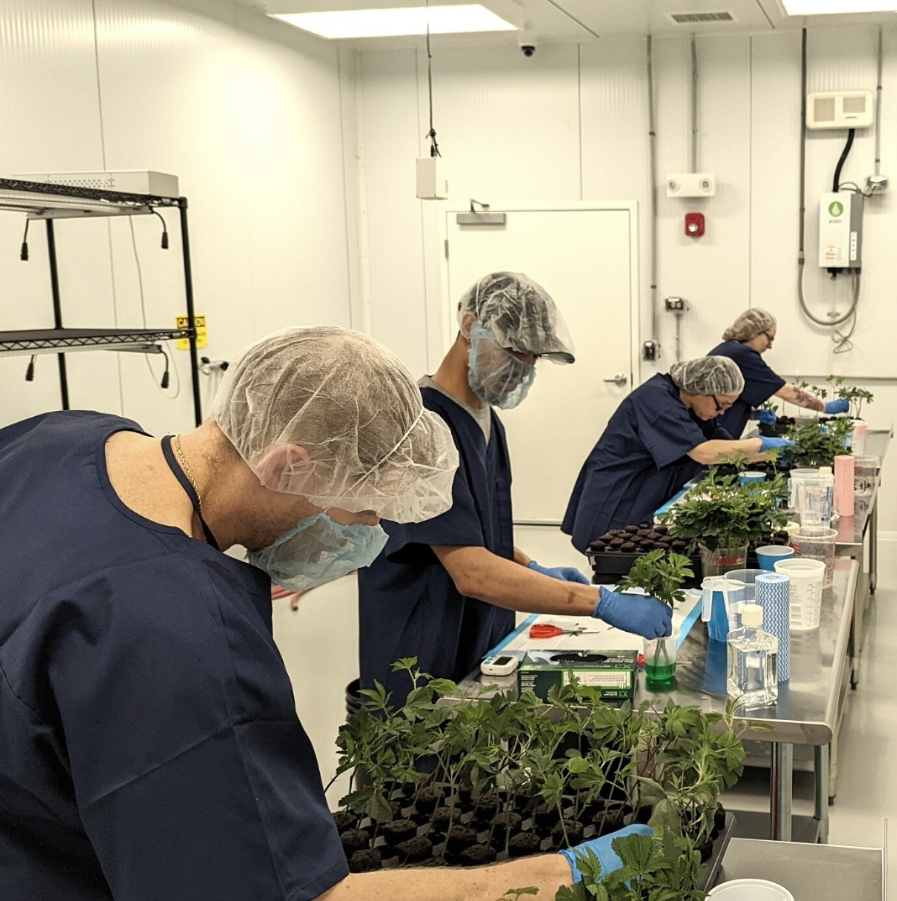
This Massachusetts cultivation facility features dedicated propagation spaces that promote healthy plants through clean workflows and precise facility design.
A stronger evaluation model therefore measures success through crop experience rather than mechanical compliance alone. It examines how environmental systems perform not just at the thermostat, sensor, or control panel, but across the active canopy where metabolic activity, transpiration, and pathogen pressure actually unfold. It connects facility data to cultivation data, operational inputs to harvest outcomes, and environmental precision to financial performance. This is the missing layer in conventional facility evaluation.
Understanding the Cost of Inaction
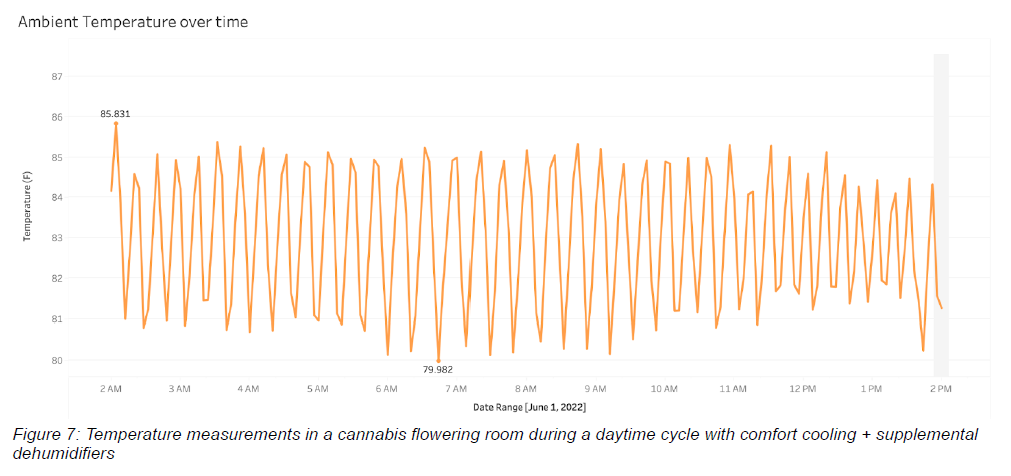

Temperature stability directly impacts plant performance. These graphs, adapted from a cultivation HVACD white paper by Brian Anderson, Michael Zartarian, and James Megerson, compare an unstable growing environment with one supported by a purpose-built HVACD system.
As cultivation operations scale, the cost of ignoring the gap between facility and plant performance compounds. Small inconsistencies become recurring losses in yield, quality, labor efficiency, and resource productivity. Facility, cultivation and finance teams need a shared performance framework, a shared language, and a shared set of horticultural benchmarks that define what success actually looks like inside a production room. Anything less leaves revenue exposed.
Preparing for the Next Evaluation Standard
The next step is not a minor adjustment to existing commissioning protocols. It is a new evaluation standard built around the biology of the crop and the economics of controlled production. In the next post, we will define that framework directly and explain how a plant-centered approach changes the way cultivation facilities are assessed, optimized, and scaled. The future standard starts with the plant.